
Interview with HOLYWATER
Bogdan Nesvit and Sasha Tkachenko on AI, storytelling, & data insights

If there is one company that is constantly at the forefront of innovation in vertical drama, it’s HOLYWATER. Rarely does a week pass without us reporting on a new groundbreaking announcement or partnership involving the company. Behind the Verticals had the opportunity to ask Bogdan Nesvit, Co-Founder and Co-CEO of HOLYWATER, and Sasha Tkachenko, Head of Studio at My Drama, questions around AI, storytelling, surprising data insights, and what is next for HOLYWATER.
But first, a roundup of this week’s vertical drama news, and a friendly reminder that our first live webinar takes place tomorrow.

👀 Spotted:
Why micro dramas might be the next radio content move hiding in plain sight.
Cal State LA partners with DramaBox to launch a groundbreaking microdrama academic course. In this context, next week Behind the Verticals is excited to share with you our recent interview with early adopter D’Arcy Smith.
Actor John Lewis launches vertical entertainment app muVpix.
The vertical drama industry is at the core a tech industry using skillsets from traditional film and television. Just one of the takeaways from last week’s Center Stage Vertical Microdrama Panel. For the rest, see here.
The late deadline for LA Vertical Fest submissions is February 21. The list of judges is here.
Japan’s Nippon TV launches vertical video division Viral Pocket.
Thank you for making Behind the Verticals #7 and #4 Rising in Film & TV on Substack over the weekend!
You can support our work by becoming a paid subscriber. If you would like to work together or have any related updates to share, send us an email.
🎙️ Interview with HOLYWATER:
HOLYWATER’s ecosystem uses AI for creation and incubation. What parts of storytelling do you still believe must remain strictly human, and why?
Bogdan Nesvit: For context, HOLYWATER TECH’s ecosystem reaches over 85 million users and includes My Passion (digital publishing and IP discovery), My Muse (AI-supported video experimentation), and My Drama (live-action vertical streaming). Together, these platforms form a fluid, multi-format content pipeline.
HOLYWATER TECH builds its products around a close synergy between creators and AI. AI is used to streamline processes and accelerate execution, while creators remain responsible for original ideas, storytelling, and creative direction.
In practice, AI delivers the most immediate impact in adaptation—moving stories from books to scripts to video—as well as in production and post-production, where data, automation, and tooling allow content to be created up to 10× faster and at a fraction of traditional costs. On My Drama, AI is primarily used in post-production and localization to scale content efficiently across markets. On My Passion, writers use AI to support research, planning, and drafting, while maintaining full creative control. My Muse sits at the center of experimentation, where AI enables rapid visual iteration, storyboarding, and format testing.
At every stage, storytelling remains human-led: books on My Passion are written by human authors; My Drama series are created by human writers, directors, crews, and cast; and on My Muse, stories are written and directed by people, with AI supporting the visual layer.
Overall, AI acts as a force multiplier across the pipeline—enhancing speed, scale, and learning—while creativity, narrative judgment, and taste remain firmly human-driven..
What’s the most surprising insight your data gave you about what audiences actually connect with and how did it impact your decisions?
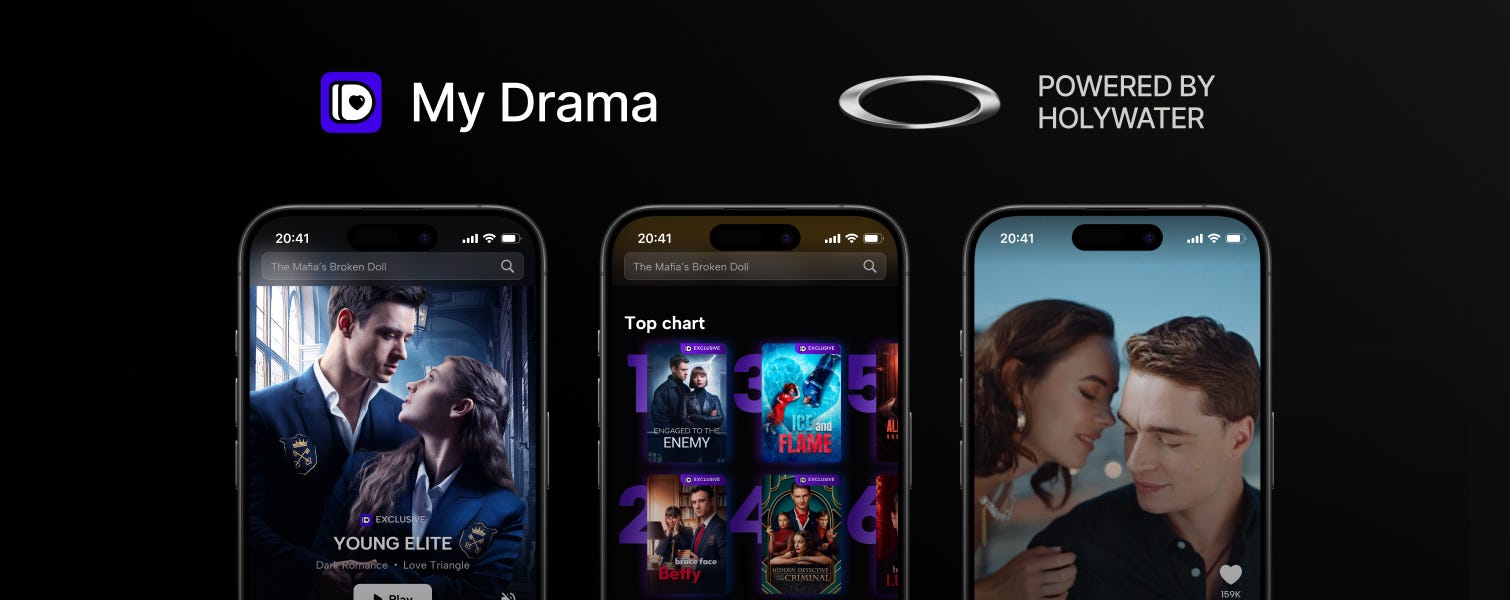
Sasha Tkachenko, Head of Studio at My Drama: We see these insights on a daily basis. Some stories resonate strongly in books, but when adapted into series, audiences often respond better to different visual settings, new twists, or even entirely reworked dialogue. We’re very responsive to audience feedback and data, because it gives us the freedom to create stories that people genuinely want to watch.
You’ve expanded beyond fiction. What genres do you see fitting (or not fitting) the microdrama mold and creating your next frontier for vertical storytelling?
